BIOGRAPHY
Born in Pennsylvania, George Higgs has worked for the last 25 years in Ireland as a composer. Kahoogaphone, his first guerrilla opera, tells the story of a homeless man who invents a machine designed not to work and built entirely out of junk. He produced and directed the play (and built the world's first Kahoogaphone) in Dublin's New Theatre in 1999, and followed this success with several street performances sponsored by Temple Bar Properties. Soon after he wrote his second guerrilla opera, The Suicide of Miss Understood, the story of a woman who, in a pill-induced reverie, dreams she is on a live TV show where the studio audience votes to spare or take her life. He produced this in Dublin's Temple Bar Music Centre with a cast of seventeen in July 2000.
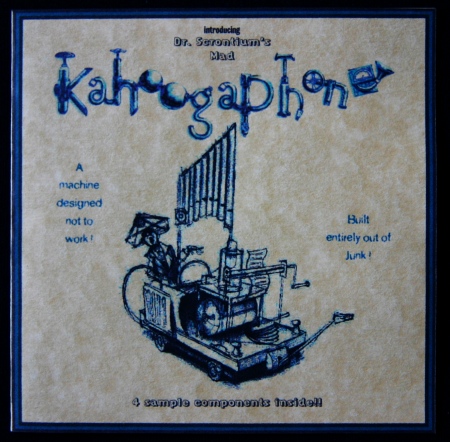
Kahoogaphone CD with illustration of 1st Kahoogaphone (P. Hannan)
2001 saw a second production of Kahoogaphone, this time dubbed Dr. Scrontium's Mad Kahoogaphone and Homeless Medicine Show. The production toured Ireland in a rickety old van with a cast of 8 and a large Kahoogaphone (the world's second, sadly inferior to the first), ending up in the Salvation Army Church for a week's run as part of the Dublin Fringe Festival. The production and tour joined forces with the homeless action group, Focus Ireland, in an effort to raise awareness of the lack of affordable housing in Ireland and encourage the government to introduce rent control. The cast and crew held a Kahoogaphone workshop for children and led a march along the Liffey boardwalk complete with Kahoogaphone, drummers and stilt-walkers.
From 2002 to 2004, George worked on his new wordless opera, HONGONGALONGALO, and undertook a master's degree in music technology at Trinity College. There he was able to workshop the opera in progress as part of his thesis and hold three performances of different sections of the piece. The opera tells no clear story, demands a cast of 32 musicians, lasts one and a half hours and involves the musicians moving about the entire space performing a variety of bizarre actions. Premiering in the Belvedere College chapel as part of the Dublin Fringe 2004, HONGONGALONGALO, received accolades all round including a four star review in the Irish Times.
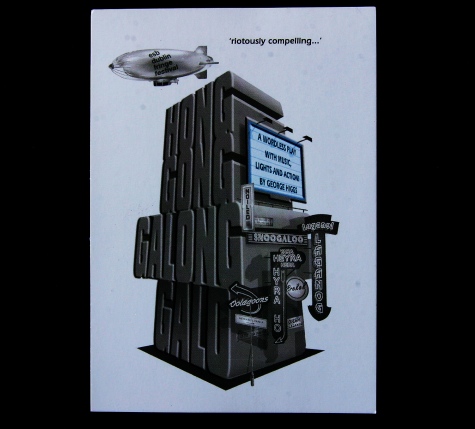
Hongongalongalo poster from 2004 production
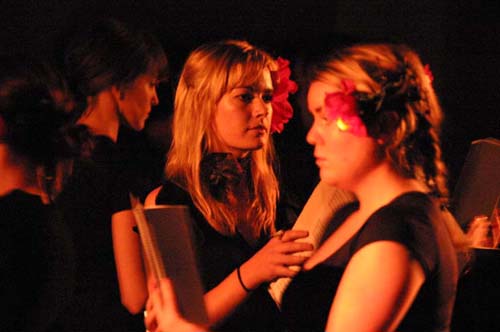
Singers moving about the theatre in HONGONGALONGALO
In 2006, George was awarded the Director’s Prize from Misha Rachlevsky of the Chamber Orchestra Kremlin for his composition, The Famine Dance, performed in both the Kremlin and Carnegie Hall. Maestro Rachlevsky later commissioned another piece from George, entitled WVH, performed in June, 2007 in Moscow.
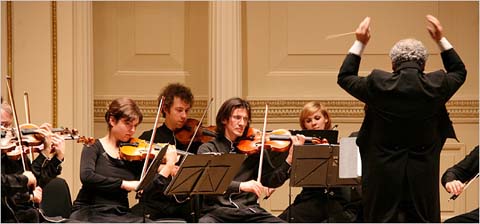
The Kremlin Chamber Ensemble performs The Famine Dance in Carnegie Hall. Nov, 2006
From 2005 - 2007, George was involved in the Tower Songs Project, run by the Dublin ,City Arts Centre,. This project sought to artistically document the changes around Dublin, specifically in 5 sets of corporation flat tower complexes scheduled for demolition. His role in the project as a composer was to record audio samples on site in order to create compositions and performances inspired by them. In the 2006 performance, only days before the demolition of the last blocks of the old Fatima Mansions, he contributed the Fatimaphone: a hammer dulcimer he fashioned to model the flat complexes with built-in electronics, connected to 4 speakers made out of steel rubbish bins to be hoisted on pulleys to the top balconies of the flats as the audience moved about the courtyard.
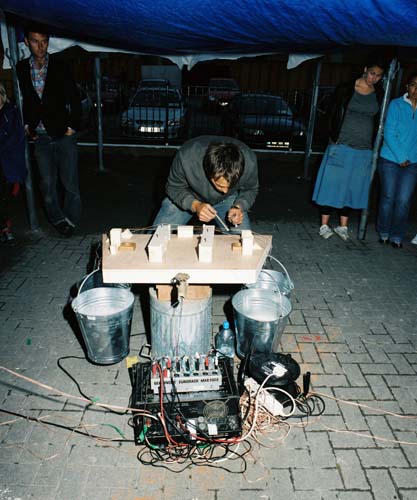
George performs on the Fatimaphone under the scrutiny of Fatima residents
In 2005, George co-founded an experimental opera project, Glue Factory, which devised musical and visual performances inspired by the spaces they filled: derelict buildings, old factories, farms, houses and city streets. Audiences were asked to pass through these spaces following a simple set of instructions. Glue Factory carried out work for a wide range of commissioning bodies, including the Butler Gallery for a performance in a derelict workhouse in Callan, Killkenny.
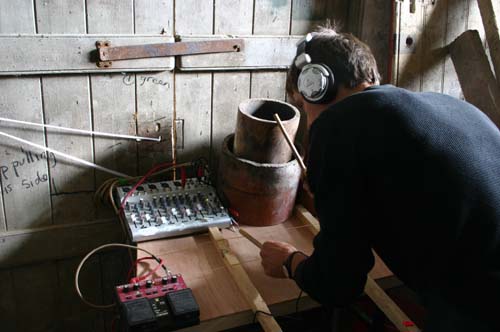
George performing with Glue Factory
For Glue Factory, George composed the Workhouse Sonata, for string trio and three voices, and the Brass Picnic, a large scale work for sixteen outdoor brass musicians which was nominated for the Spirit of the Fringe Award 2006. The Brass picnic involved each audience member meeting a brass musician and a waiter at a specific location in Dublin city centre. The audience member was served food and given a solo performance by the brass musician, and then led to a new location to be met by another audience member, brass musician and waiter. After more food and a duet performance, the 2 audience members were led to a new location where they were met by 2 more audience members, 2 more brass musicians and 2 more waiters. After more food and a quartet performance, the 4 audience members were led to a new location to be met by 4 more audience members, brass musicians, and waiters and given an octet performance. This pattern carried on until all 16 audience members were given a performance by a sixteen-strong brass ensemble and served by 16 waiters.
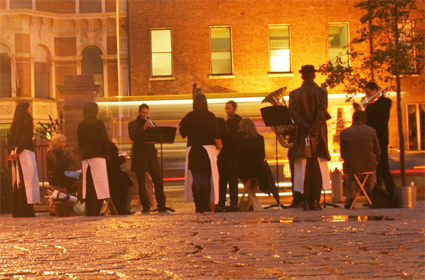
Brass Picnic: a mobile musical performance for 16 brass musicians, 16 waiters and 16 audience members.
George was awarded an Arts Council Bursary in 2005 to research his compositional technique of asynchronous harmony. This research has permeated all of his work since.
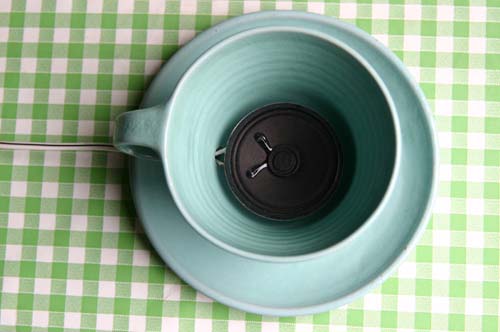
Teacup speakers built for Storm in a Teacup performance
George received the generous support of the Arts Council for his next 3 large scale projects.
The Electro Acoustic Exchange
was a work for 8 hanging speakers, cello, commodities and sine waves,
and was installed in the Project Arts Centre in July, 2007. To complete
this project, George wrote a score based on a three-month-study of
fluctuating commodity values around the world (please see short film on
website). Audience members were free to wander amongst the hanging
speakers, and even to push them as they listened and watched the sounds
of fluctuating values.
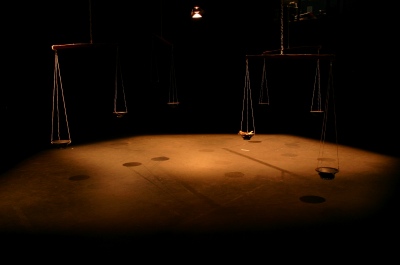
The Electro Acoustic Exchange in the Project Arts Centre, Dublin, July 2007
Grain jumps to the rhythm of its own value in The Electro Acoustic Exchange, July 2007
Bed of Macbeth, which was installed in the
Project Arts Centre, Dublin in October, 2008 involved a bed with a movie
screen on its canopy, vibrating speakers in its mattress and audio
speakers all around. One or two spectators could place a coin into a
slot and lie in the bed to watch one of five films George composed
based on the bedchamber relationship between Macbeth and Lady Macbeth.
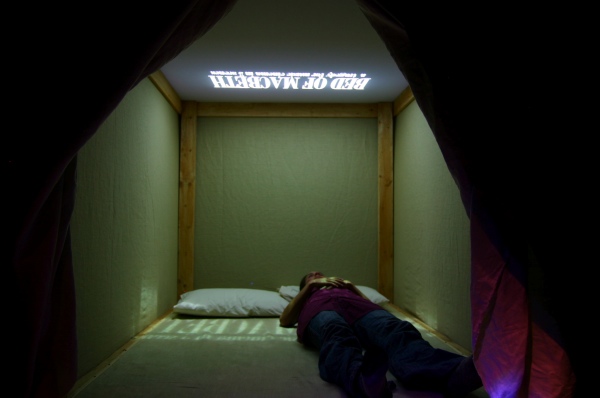
Watching the film in bed whose mattress vibrates
the rhythm of Macbeth's doom, Bed of Macbeth in the Project Arts Centre,
Dublin, September, 2008
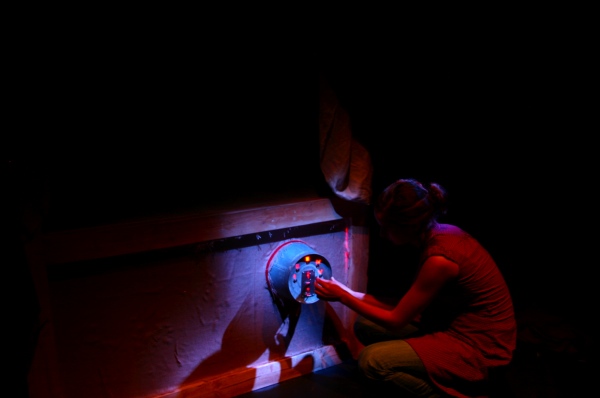
Inserting a coin into the bucket, and choosing one
of the 5 scenes of music cinema. Bed of Macbeth, in the Project Arts
Centre, Dublin, September, 2008
Music for Modern Animals comprised three sculptures on Airfield
Estate which functioned as hand-cranked music players. Each sculpture
housed a separate part of a three movement composition for telegraph
ensemble and livestock orchestra. The sounds used in the piece were
recorded around Airfield Estate and used morse code performed by the
composer.
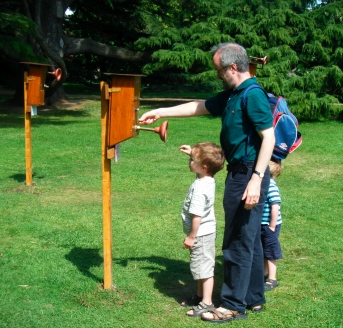
A man and his children listen to Part One of Music for Modern Animals
using the hand crank to power the machine.
Head of Hamlet was a 2 week installation in the Project Arts
Centre in December, 2009 which explored a new approach to Shakespeare's
timeless character through sound, sculpture, light and vibrations.
Entering the space, the audience encountered a large mask suspended from
the ceiling: a bizarre fusion of a theatre, helmet and cinema. The
audience could stand inside the sculpture to witness the "theatre
interior" of Hamlet's mind by watching mechanical images on the screen
above them perform a unusual ballet to the music in 2 speakers around
their heads and the percussive vibrations coming from the rear panel of
the mask. The audience could also witness a different perspective, or
the "theatre exterior" of Hamlet's mind, while wandering outside the
head.
The film and sound were composed of animated images and sound samples
recorded during the actual construction of the mask (mirroring the
mechanics and electricity of Hamlet's mind), along with the voice of
actor Deirdre Roycroft reading some of the Dane's greatest speeches. The
piece was generously funded by the Arts Council's Project New Work
Award.
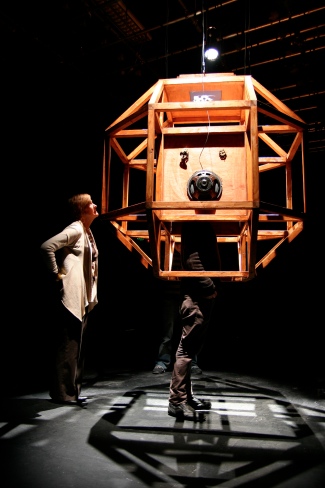
Audience members witness the theatre exterior and interior of the Head of Hamlet
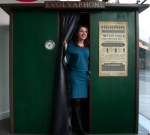
The Evolvaphone premiered on November 24th, 2009 in the Science Gallery, Trinity College.
The Evolvaphone is a booth which two people can enter via a
curtain, input their initials using a telegraph key and state their
initials into a mouthpiece. They will then witness a composition
generated from this information according to the laws of natural
selection.
The Pure Data algorithm was developed in consultation with Trinity
College geneticist, Dr. Aoife McLysaght, and funded by the WELLCOME
Trust, the Arts Council and the Science Gallery.
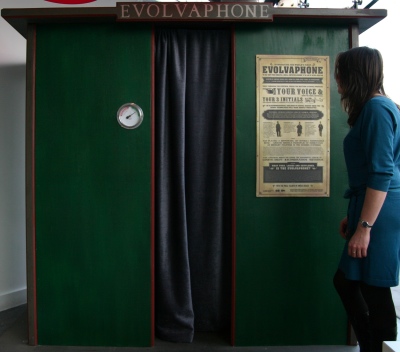
Dr. McLysaght reads about the Evolvaphone and genetics
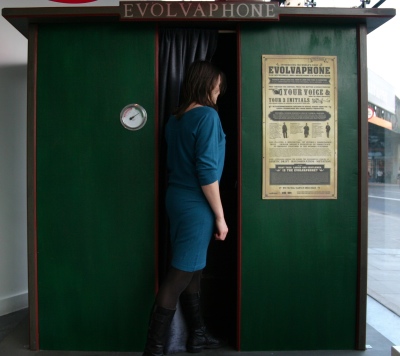
The doctor enters the booth
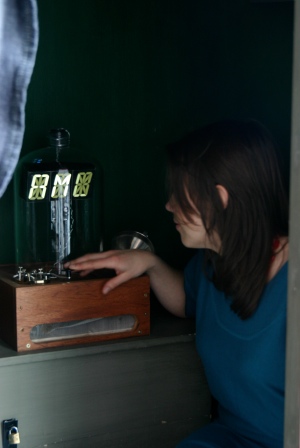
Dr. McLysaght enters her initials and awaits evolution through music.



In 2010, George created the Joculator: a pedal powered electro acoustic vehicle which allows him to create and perform music on the street. The composer sits within the octagonal cab where he can operate an on-board computer and associated hardware to record environmental sounds on the move. He can then freely incorporate these sounds into pieces of music which he plays through the large horn speakers adorning the vehicle. The Joculator has had 4 performances in Ireland (see performances page), and was initially commissioned by Temple Bar Cultural Trust.
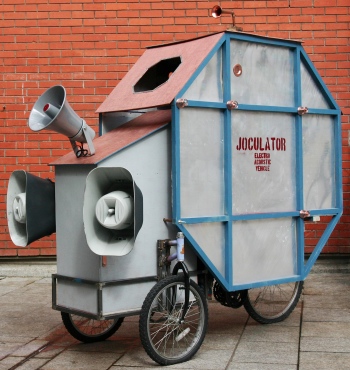
The Joculator on the streets of Temple Bar, Dublin.
From 2009 to 2011, George developed The Jimmy Rig Slip Jig - a large instrument that is assembled live in front of an audience – with funding from the Arts Council and Dublin City Council. 6 performers follow a mixture of building plans and musical score, to erect an electro acoustic aggregate of steel pipes, wire, wood and scaffolding. Audiences witness a musical construction, both in outward form and musical content, come together piece by piece before their very eyes and ears.
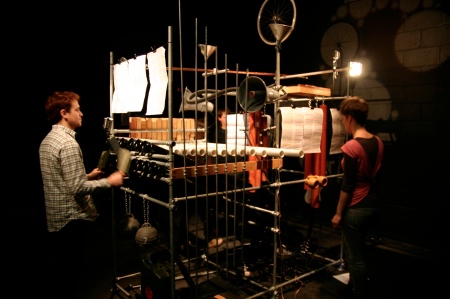
The Jimmy Rig Slip Jig in Project Arts Centre
Click here to watch The Jimmy Rig Slip Jig Workshop Performance at the Sensorium Festival
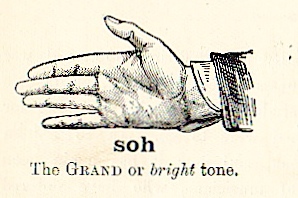
After a brief time working with the Dublin Deaf Choir, George was granted an Artist in the Community Award in 2010. He was appointed composer in residence at St. Mary's School for Deaf Girls in Dublin, where he created a performance group called the Sense Ensemble. During the 2010 – 2011 school year, George developed an instrument – The Machine of Song - for the ensemble to perform on, and a composition especially for the instrument.
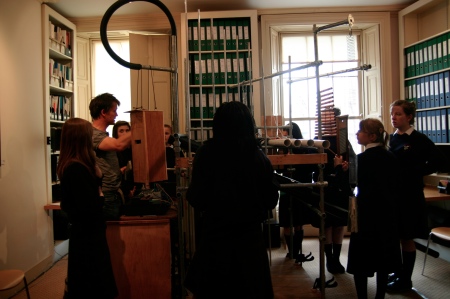
George and the Sense Ensemble perform on The Machine of Song in the Contemporary Music Centre in May, 2011.
The instrument used visual, tactile and sonic expressions of sound and the performance involved gestural cues based on Irish Sign Language.
George continued to work in the school over the next 2 years further developing instruments that enabled communication between deaf and hearing performers. The aim of this work was to uncover the great musical potential that exists in the deaf community.
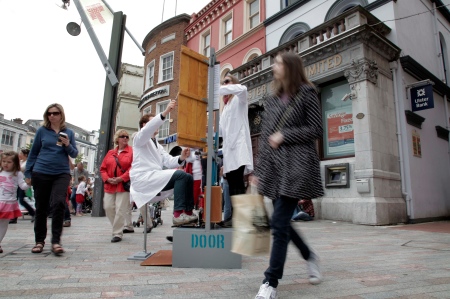
DOOR on the streets of Cork
In 2012 George was funded by the Arts Council for his mobile outdoor street composition, DOOR. This door - musically endowed with built-in cello, gongs, cajon, slit drums and cymbals - was trundled through the streets by two musicians, stopping periodically to perform a 15-minute-composition. DOOR premiered at the Cork Midsummer Festival, and went on to be performed at the Electric Picnic, The Big House Festival and travelled to New York City to tour the streets of Greenwich Village.
In 2013 he was granted a Dublin City Council Public Art Commission to carry out a project he developed during that time called The Lost and Found Sound Assembly.
This was a large instrument that George created from materials he collected from recycling centres around Dublin for which he composed a score to be played by an ensemble including both professional musicians and students from St Mary's School for Deaf Girls. The performances of the piece took place around Dublin City Centre, one most remarkably in Ringsend Recycling Centre. The performances involved the musicians assembling the instrument in front of the audience in the manner of the Jimmy Rig Slip Jig.
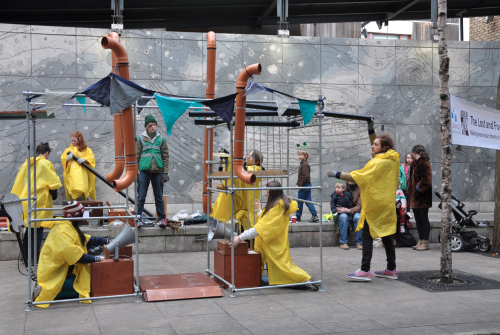
The Lost and Found Sound Assembly: musical assembly of the instrument.
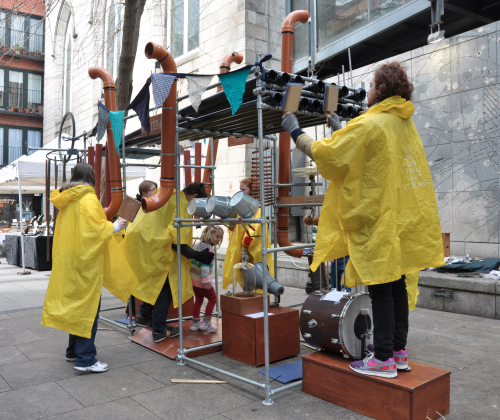
Watch The Lost and Found Sound Assembly video
GEORGE RECEIVES PHD
After 3 years of research in Trinity College’s Department of Electronic and Electrical Engineering, George was awarded a PhD for his thesis: ‘An Approach to Music Composition for Deaf and Hearing Alike’. The research was generously funded by the Irish Research Council.
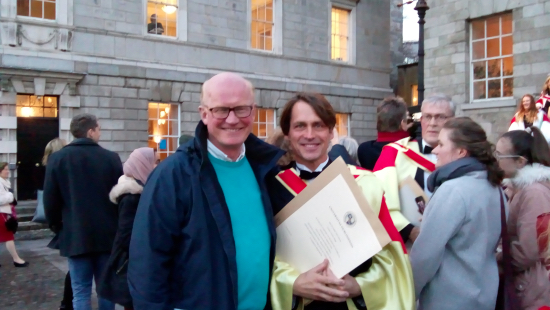
”Dr Higgs, I presume?!” George and his thesis supervisor, Dr Dermot Furlong,
in the front square of Trinity College
after the PhD graduation ceremony.
The research was inspired by the 3 years George spent working in St Mary’s School for Deaf Girls as composer-in-residence from 2010 to 2013. While in the school, George came to view the musical experience as a sense ensemble, in which all the senses collaborate. In the course of the PhD, 4 studies on multisensory compositional techniques were carried out with deaf and hearing participants. Some of these were controlled studies conducted in a laboratory, while others took the form of live performances. The photographs below are an example of the latter, showing scenes from Sense Ensemble, Study #2 performed in The Samuel Beckett Theatre in October, 2016. The performance featured the CRASH Ensemble string quartet, smoke ring cannons and the rhythmic use of Irish Sign Language.
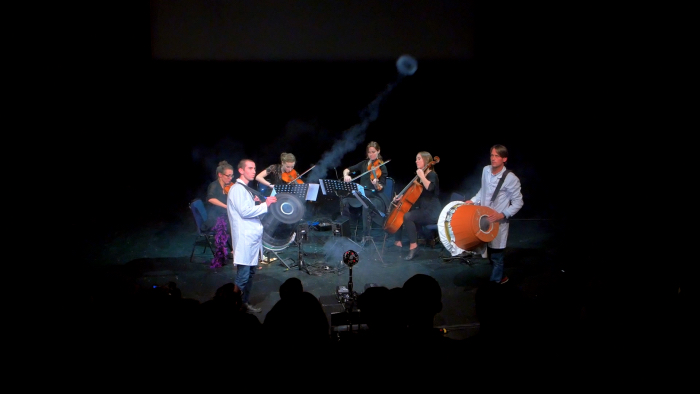
In this photo from Sense Ensemble, Study #2, we see George and fellow performer Neimhin Robinson fire vortex cannons, sending smoke rings wafting over the heads of the audience to the back of the auditorium.
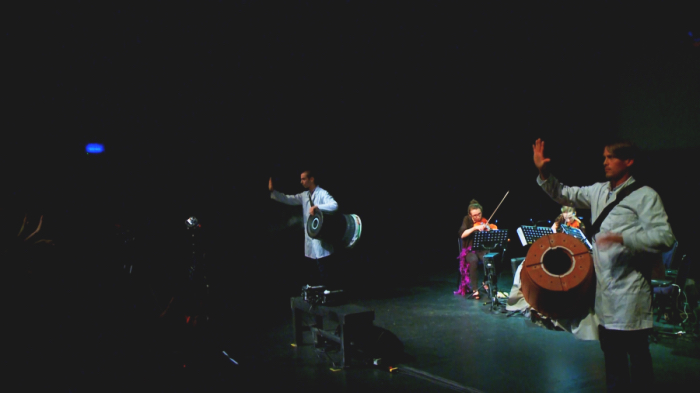
In this photo from Sense Ensemble, Study #2, we see George and fellow performer Neimhin Robinson performing a rhythmic pattern of Irish Sign Language gestures which the audience were invited to mimic.
Watch “The Sense Ensemble, Study #2”
WORK SONGS
In 2018, George and visual artist Fiona Dowling were funded by South County Dublin to collaborate with workers from a cross-section of workplaces, both industrial and rural, to create Work Songs: a musical portrait of South County Dublin's economic profile.
Rhythms, cycles, movements and sounds of work routines were transformed into song and performed by workers.
Work Song #1:First Earlies (performance photo and video-link below) was composed by George in collaboration with Fiona Dowling and plot-owner Catherine Cunningham at Friarstown Allotments.
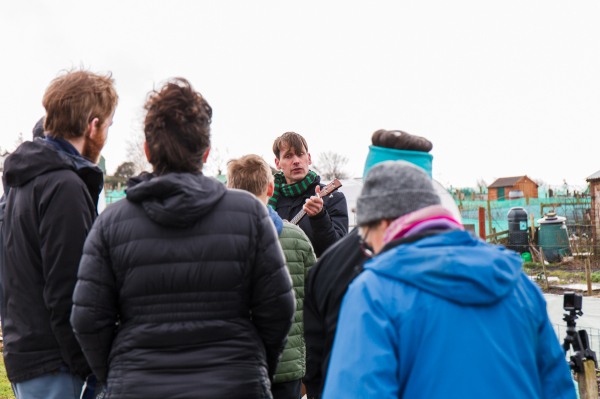
George plays the ukelele as participants sing Work Song #1, First Earlies in March, 2018.
Watch Work Song #1: First Earlies
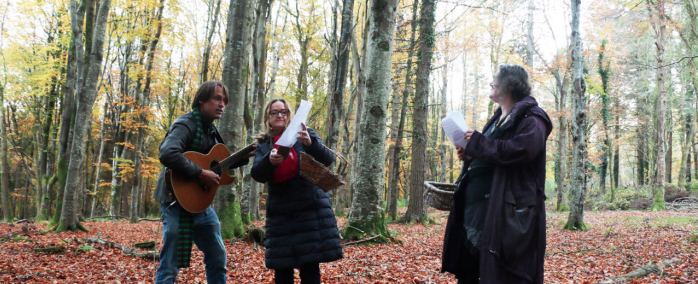
George rehearses Work Song #3 (Hear Us Amongst the Fungus) with Freda O’Dea and Sheila Baron in Massy’s Woods, South County Dublin.
RHYTHM CLUB
This was a project in which George, dancer Laura Dowdall and a sign language interpreter worked with members of the Dun Laoghaire Deaf and Deafblind community to explore rhythm through sound, vibrations and movement.
The project, organised by Dun Laoghaire Rathdown Arts Office, involved residents of St Joseph’s House for Deaf and Deafblind Adults and the Anne Sullivan Centre.
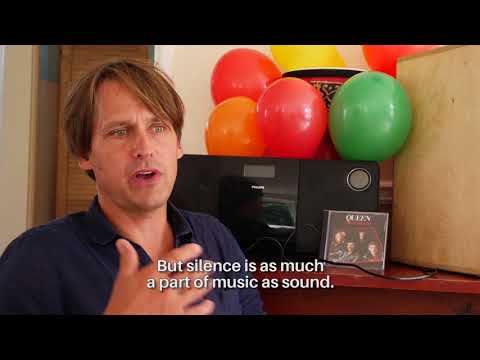
George speaks about Rhythm Club on the youtube video (see link below).
Watch The Rhythm Club video
Harmonic Jello
In May, 2019, George was awarded an Arts Council Music Bursary to compose a piece for cello and diatonic harmonica, entitled Harmonic Jello.
The cello and the harmonica have a lot in common. Both are capable of a great range of textures and dynamics, with a similar harmonic architecture based on relationships of fifths.
For over 4 months, George sat at his desk experimenting with different combinations of cello and harmonica, the former sandwiched between his knees and the latter held in a neck harness. This period of intensive work resulted in the 16 minute piece, Harmonic Jello.
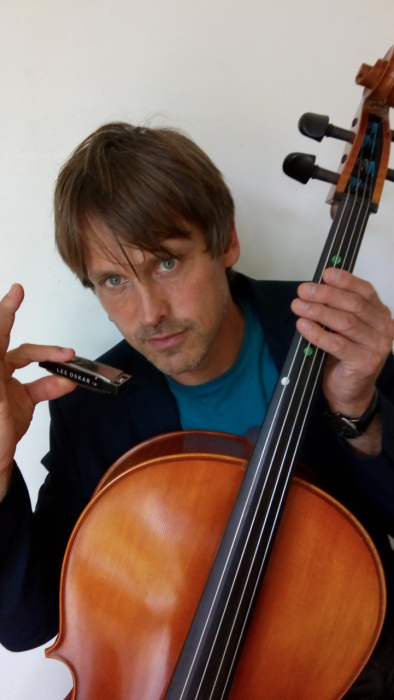
Hello, Harmonic Jello.
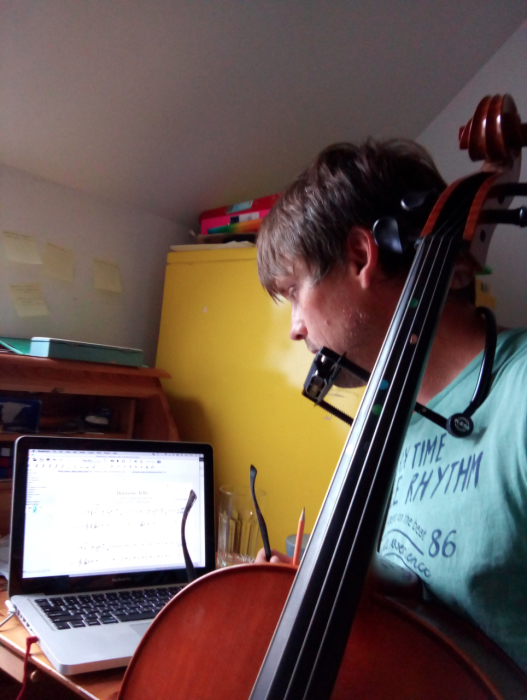
For over 4 months, George sat at his desk experimenting with different combinations of cello and harmonica, the former sandwiched between his knees and the latter held in a neck harness.
_________________________________________________________
White Swans, Black Water
Each winter, about 12,000 whooper swans migrate to Ireland from Iceland. George spent a few days in January, 2019, recording their calls on the Blackwater River just outside Lismore, County Waterford. A few months later, he was awarded a Waterford Artlinks Bursary to compose a piece for guitar ensemble and tape based on these recordings. In July, 2020 he workshopped the piece with young musicians from Music Generation in Dungarvan, County Waterford.

The song of the whooper swan suggests a lot of interesting extended techniques for guitar. The ways in which the birds call to each other - their conversations, so to speak - are especially interesting to consider when composing for guitar ensemble.
____________________________________________
Over the years George has written some three hundred songs, several straight plays (In Case, Dog is Dead), performed as a musician for numerous bands in Dublin and San Francisco(Triple Piglet, The Moriarties), scored and orchestrated a film(Park , directed by John Carney and Tom Hall), written thousands of simple poems and acted in a number of television commercials (although he doesn't own a TV). He plays banjo, guitar, the singing hoses and works periodically as a choir director.